An AI-native EHR clinicians actually trust
Leading product design for a HIPAA-aware mental-health provider workflow — turning documentation, clinical context, and billing into intelligent, reviewable moments.
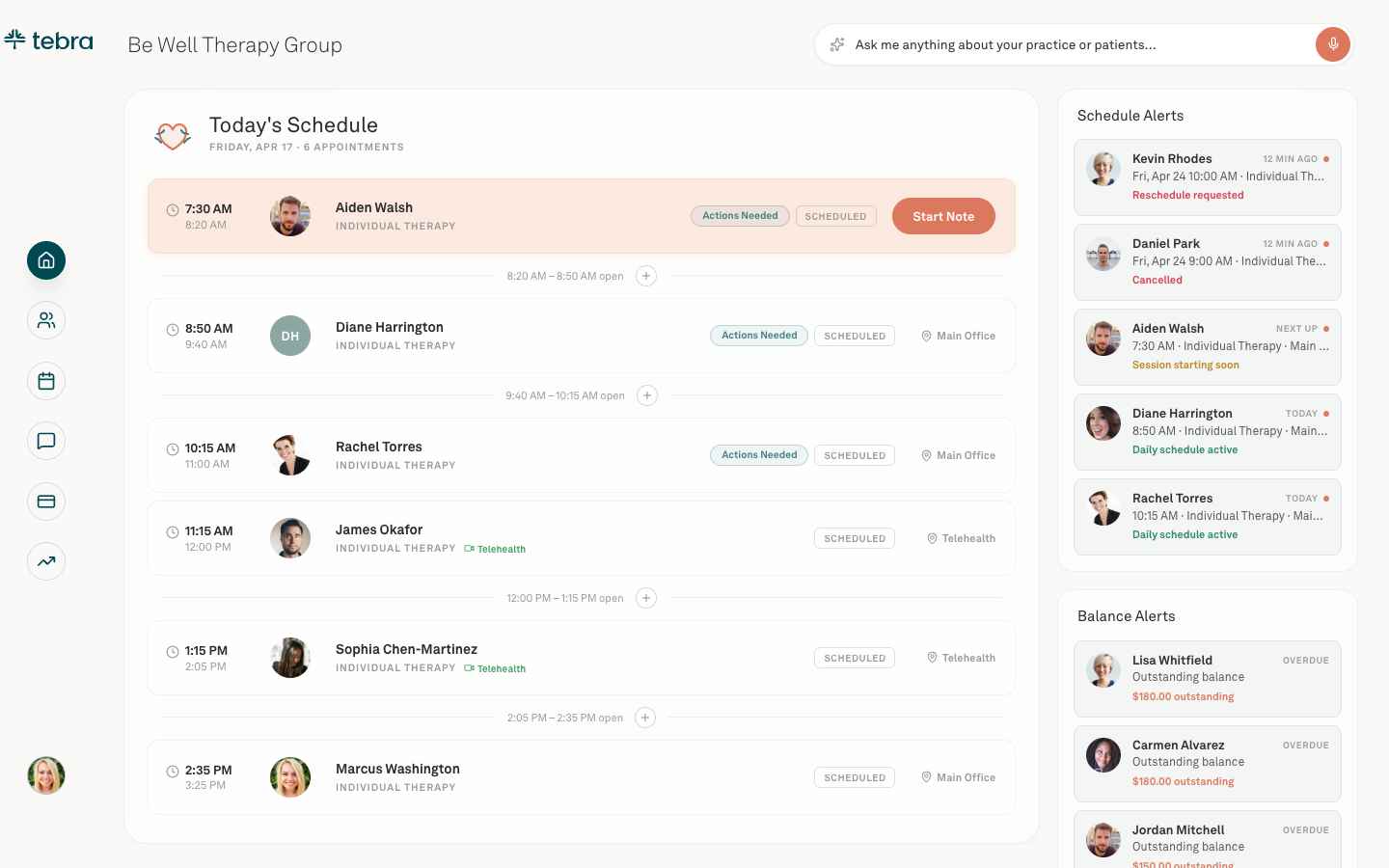
Product Design
Solo mental-health providers spend more time on the record than with the patient.
Tebra set out to build an AI-native EHR that gives that time back — drafting documentation, surfacing the right clinical context, and smoothing billing — without ever taking the clinician out of the decision. I led product design across the provider day-loop: start the day, prep for the visit, deliver care, reconcile the record, and close the encounter.
The hard part was never the AI's capability. It was designing an experience trustworthy enough that a clinician would put their name on what it produced.
Provider research surfaced a consistent set of pains — and a deep wariness of AI that overpromised:
- Documentation burden that pushed notes into evenings and weekends.
- A fragmented tool stack with no single command surface.
- Preparation gaps before each session — context scattered across systems.
- Billing complexity that quietly leaked revenue.
- Low trust in AI features that hid their sources or acted without consent.
We grounded the product in three interaction principles that kept fast AI work clinically accountable.
AI proposes
Drafts SOAP notes, extracts diagnoses, and recommends CPT codes — always with visible provenance.
Experts decide
Providers review, correct, and approve before anything commits to the record.
Systems own facts
Deterministic services preserve workflow, record, and identity state — not the model.
Inside the workflow
"AI drafts and recommends. Experts review and approve. The record stays accountable."