
Championing user-centric design
User-centric design is not a slogan. It is a set of operating habits that keep the team close to real behavior, real constraints, and real outcomes.
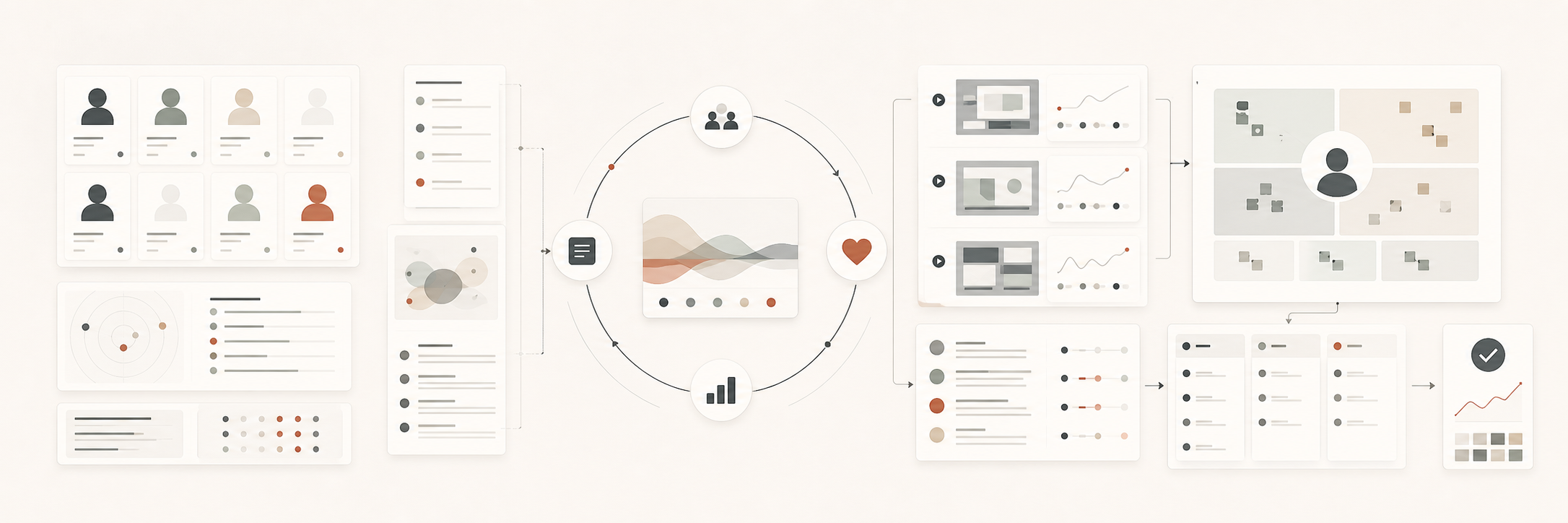
How design leaders keep real user needs at the center through research, testing, feedback loops, and cross-functional collaboration.
Start with evidence
A user-centric team begins with observed behavior, interviews, support signals, analytics, and usability findings. The goal is not to collect anecdotes; it is to understand what users are trying to accomplish and where the current experience breaks down.
Keep feedback continuous
Research should not happen only at the beginning. Continuous testing and feedback loops help teams correct direction while the work is still changeable. Prototype reviews, moderated sessions, surveys, and product analytics all have a role.
Make it cross-functional
User-centered work is strongest when product, design, engineering, support, and leadership share the same evidence. That shared context turns user needs into product decisions instead of isolated research reports.
Measure the effect
The point is not simply to feel empathetic. A user-centric design approach should improve task completion, satisfaction, retention, conversion, support volume, and user trust.
- Start with evidence before choosing a solution.
- Make the decision model visible to product, design, engineering, and leadership.
- Connect craft to measurable user and business outcomes.
FAQ
What is user-centric design?
User-centric design is a product-development approach that bases decisions on user needs, behavior, feedback, and measurable outcomes.
How do teams champion user-centric design?
They involve users early, test continuously, share evidence across functions, and connect design decisions to user and business metrics.
Why does user-centric design matter?
It reduces wasted effort, improves adoption, and helps teams build products that solve meaningful problems.

Jay Trainer
Design Leader
Design executive focused on AI-native healthcare workflows, UX research, product design leadership, design systems, and human-in-the-loop product development.