
Redesigning the EHR around the provider's day
A decade-old clinical EHR, rebuilt around the provider's day, and a model for how AI earns a clinician's trust: it drafts and recommends, the clinician reviews and approves, and the record stays accountable.
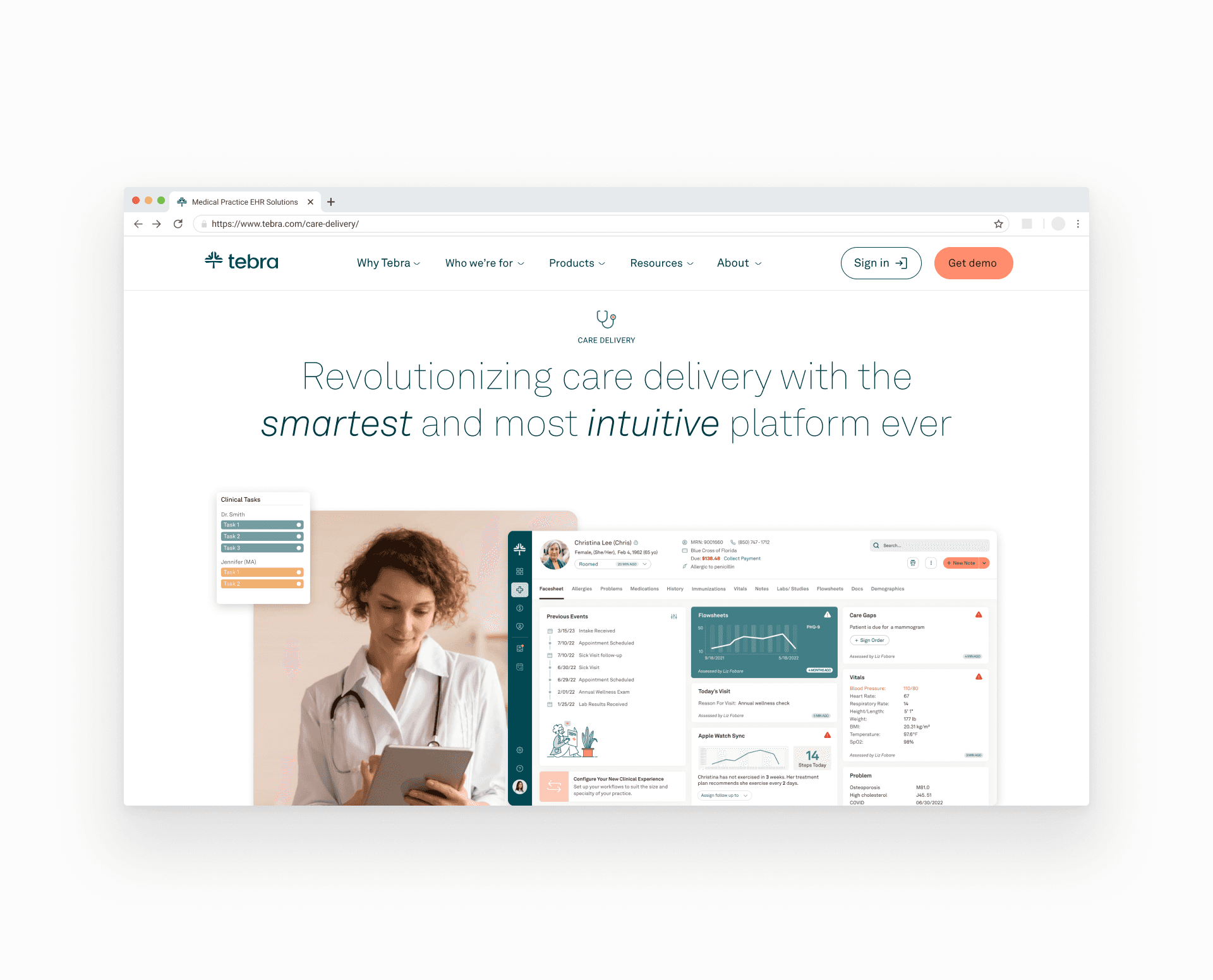
Modernizing clinical work without surrendering accountability
Platform judgment
Reframed a decade-old EHR around the provider's day-loop (prep, encounter, note, follow-up) instead of the software's module structure.
AI trust model
Defined the reviewable pattern that lets AI draft a clinical note while the clinician stays accountable. Provenance and edit are first-class states; approval and commit follow.
Reusable system
Turned that boundary into platform interaction patterns other product teams could adopt, not a one-off screen.
Independent providers needed an EHR that cut administrative load without compromising clinical accountability.
Tebra (formed from the merger of Kareo and PatientPop) supports more than 100,000 healthcare providers. I led product design for the clinical product: redesigning a decade-old EHR experience and defining how AI could support notes, chart review, and billing decisions in ways a clinician could inspect and trust.
The bet wasn't to make the interface feel futuristic. Complex clinical work had to get calmer and faster, and more defensible, without the software becoming the author of the medical record.
Provider research and workflow analysis showed a system that asked clinicians to adapt to software structure instead of the other way around. And the moment AI entered the workflow, a harder question surfaced: a clinical note is a legal, billable, accountable artifact. AI could draft one in seconds. Nothing established said how a clinician stays accountable for something a model wrote.
- Documentation work spilled into nights and weekends.
- Patient context was scattered across notes and schedules, and billing lived in a separate workflow.
- Legacy EHR patterns didn't mirror how providers actually think through a day.
- AI stayed promising but unsafe until source, review, correction, and approval were explicit, inspectable states.
I translated provider research, competitive EHR analysis, and regulatory constraints into a product design roadmap: moving from concept prototypes to documentation patterns, patient-review flows, annual-visit support, and billing-adjacent decision surfaces. One judgment held the work together: AI assists, the clinician authors, and the system makes the difference visible.
Design around the visit
Reorganized the provider's day-loop (prep, encounter, note, follow-up) instead of isolated screens.
Make AI reviewable
AI could draft and recommend. Provenance and edit states kept the clinician accountable, and approval controls sat on top.
Separate facts from assistance
Deterministic systems owned record state and workflow rules; AI handled synthesis and drafting, never the source of truth.
I led a design team of 3-5 across Tebra's Care Delivery and Patient Experience, partnering with Product, Engineering, and go-to-market, and, in the later AI-native work, with data/ML and compliance. The clearest VP-level signal in the work is the boundary model: AI speeds clinical work only when the product makes authorship and evidence visible, and responsibility explicit, turning AI from a novelty into a workflow participant a clinician can trust.
Judgment under ambiguity
Set the rule that AI assists and the clinician authors, then made authorship and evidence visible as design states, with approval following, instead of disclaimers.
Led across functions
Drove the clinical design direction across Product and Engineering, with go-to-market close behind, aligning a regulated workflow around the provider's day.
Reusable trust patterns
Provenance and edit states became platform interaction patterns; approval and commit came with them rather than living as one-off UI details.
Clinical workflow concepts
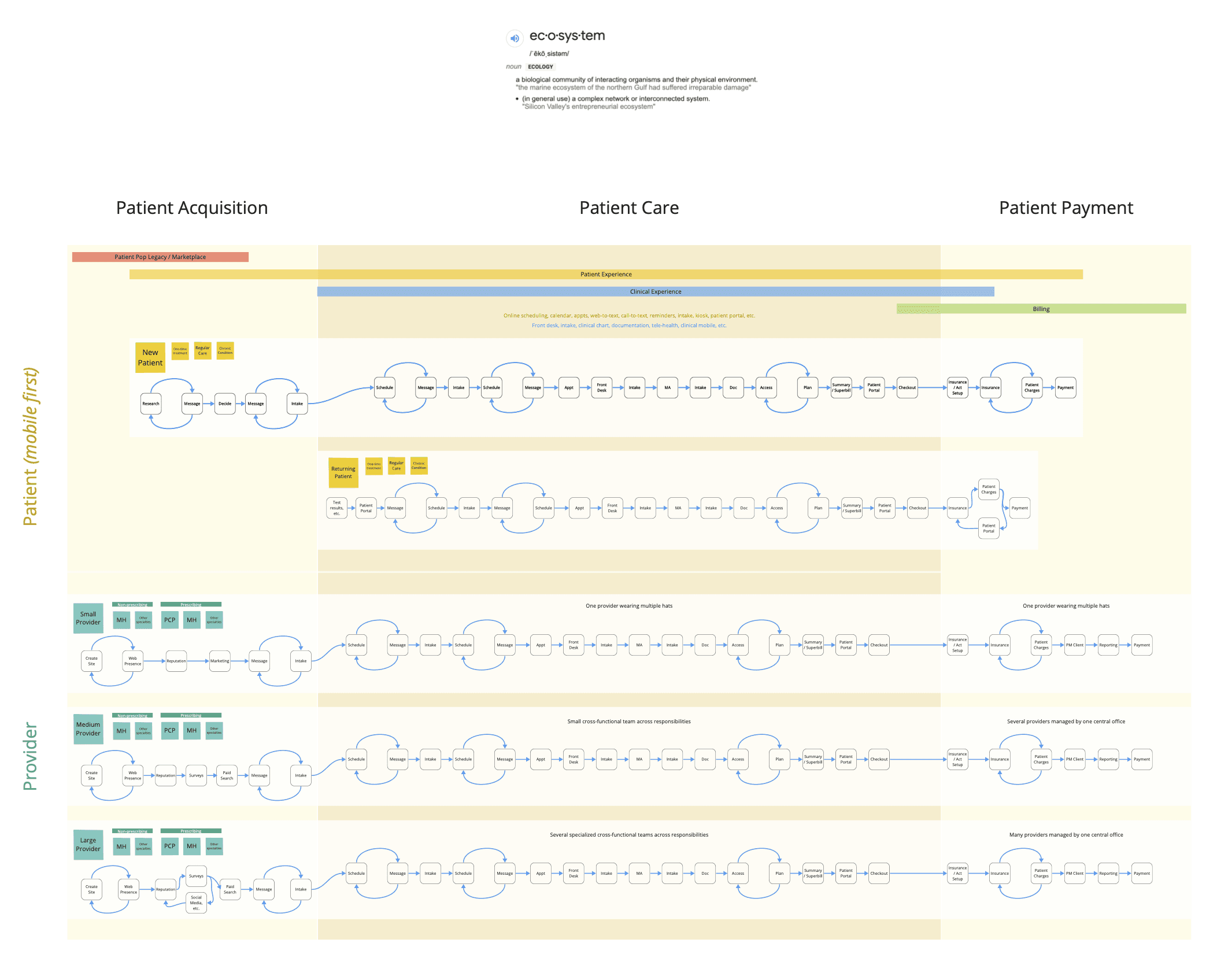
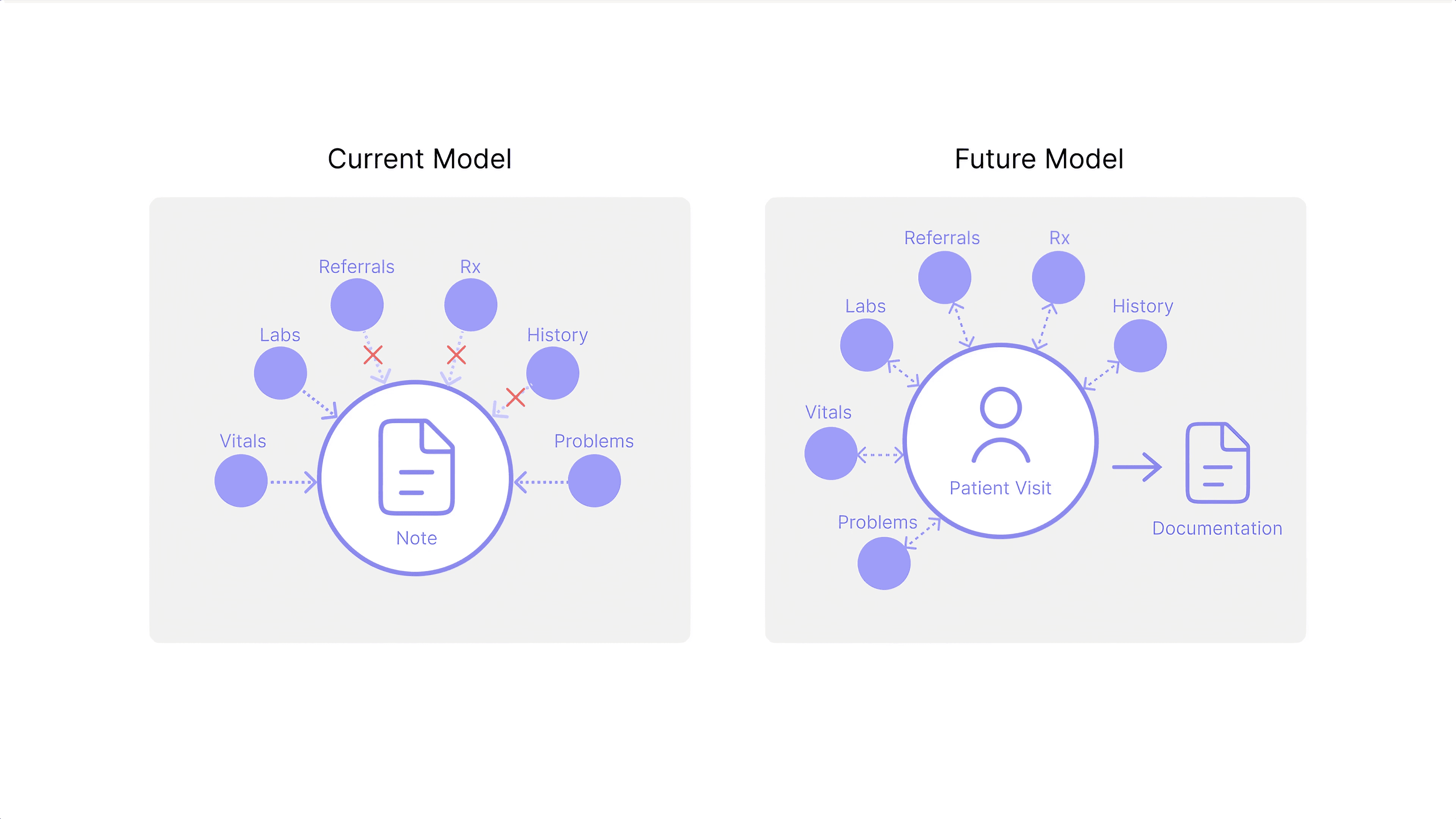
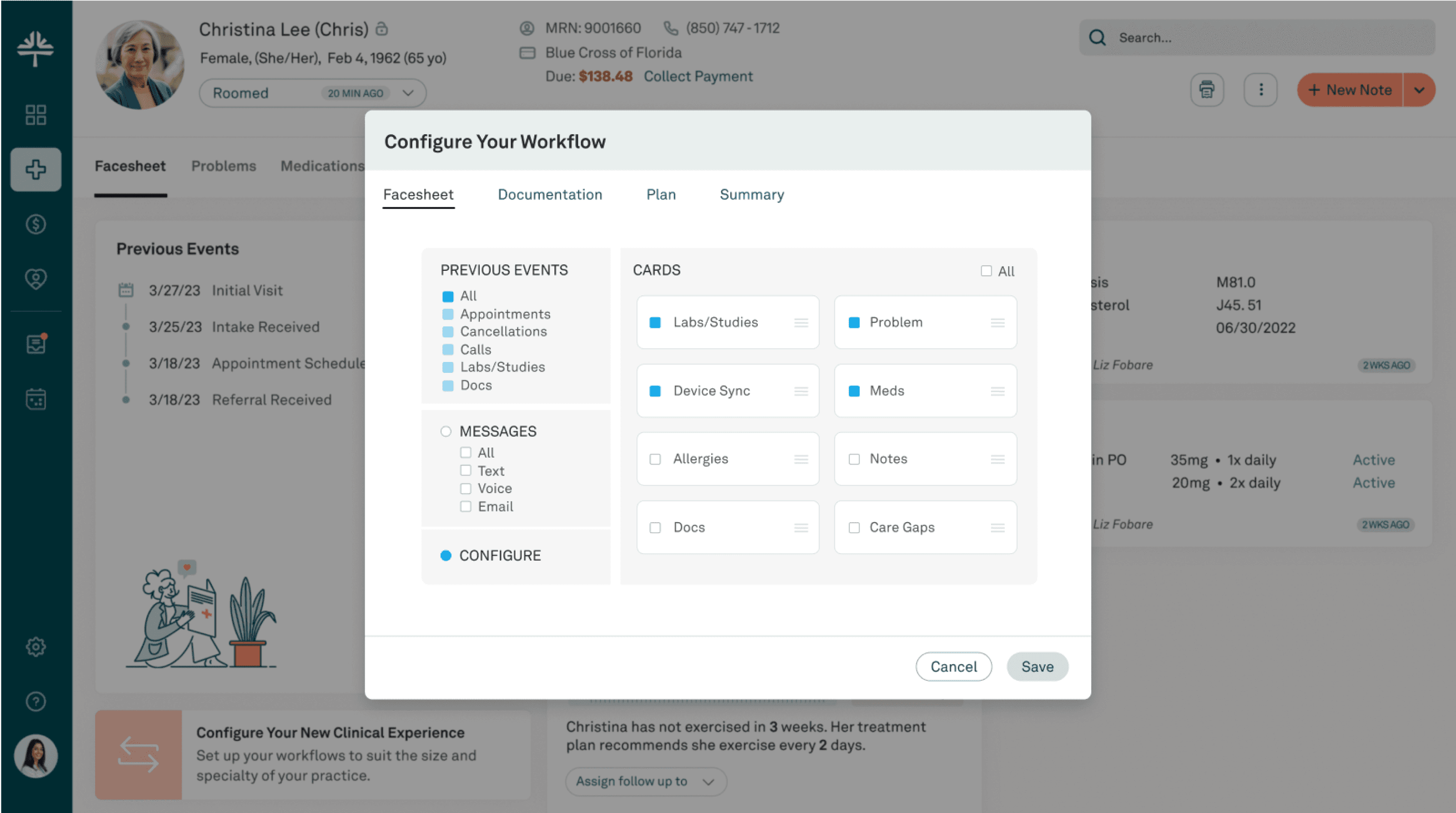
AI drafts and recommends. Clinicians review and approve. The record stays accountable.
AI can draft the note. The clinician must remain the author.
Documentation that defends itself
AI-generated SOAP notes with a draft → source → edit → approve → commit model, reducing the burden that spills into nights and weekends while keeping the clinician accountable for the record.
An EHR around the provider's day
Reframed a decade-old clinical experience around the provider's day-loop (documentation, context, review, billing) on a platform serving 100,000+ providers.
Reusable trust patterns
Turned provenance and edit states into platform interaction patterns the whole product could adopt, with approval as a first-class state. Led across Care Delivery and Patient Experience.