
What is UX strategy?
UX strategy is the connective tissue between user evidence, product direction, and business outcomes. It gives design work a clear reason to exist.
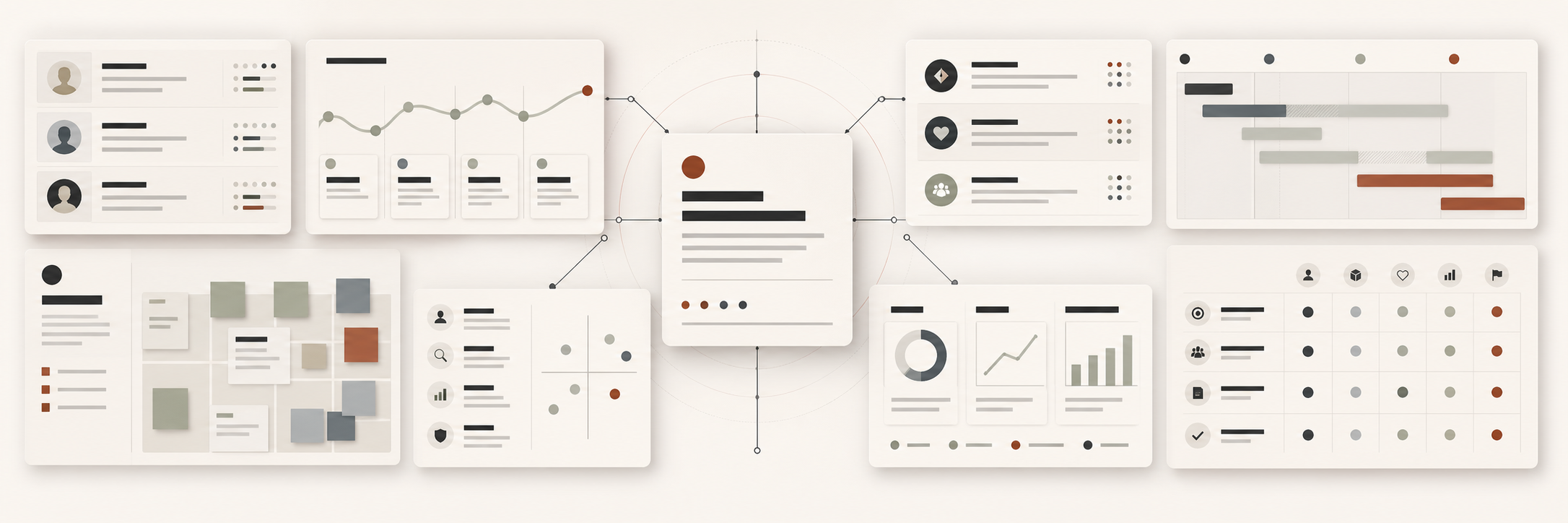
A practical definition of UX strategy and how it aligns user needs, business goals, product vision, and measurable outcomes.
A useful definition
UX strategy is a plan for how a product experience will create value for users and the business. It connects research, competitive context, product bets, design principles, and measures of success into one operating model.
What belongs in a UX strategy
A strong UX strategy names the audience, the problem, the desired behavior change, the experience principles, the product roadmap, the research plan, and the metrics that will prove whether the work is improving the business and the user experience.
How teams use it
Product leaders use UX strategy to make tradeoffs. Designers use it to decide what to explore and what to reject. Researchers use it to focus learning. Engineers use it to understand why an experience matters before implementation begins.
Where it fails
UX strategy fails when it becomes a slide deck detached from delivery. It needs to live in roadmap conversations, sprint planning, critique, usability testing, and success measurement.
- Start with evidence before choosing a solution.
- Make the decision model visible to product, design, engineering, and leadership.
- Connect craft to measurable user and business outcomes.
FAQ
What is UX strategy?
UX strategy is a plan that aligns product experience decisions with user needs, business goals, and measurable outcomes.
How is UX strategy different from product strategy?
Product strategy defines what the business should build and why. UX strategy defines how the product experience should create user value and support that direction.
What should a UX strategy include?
It should include research insights, target users, journey maps, principles, roadmap priorities, success metrics, and a clear decision model.

Jay Trainer
Design Leader
Design executive focused on AI-native healthcare workflows, UX research, product design leadership, design systems, and human-in-the-loop product development.