
A practical learning system for AI design work
Design enablement for people learning to use AI with judgment, not just speed: a transcript-backed atlas that turns saved AI videos into deep lessons and diagrams, plus practice prompts and buildable projects.
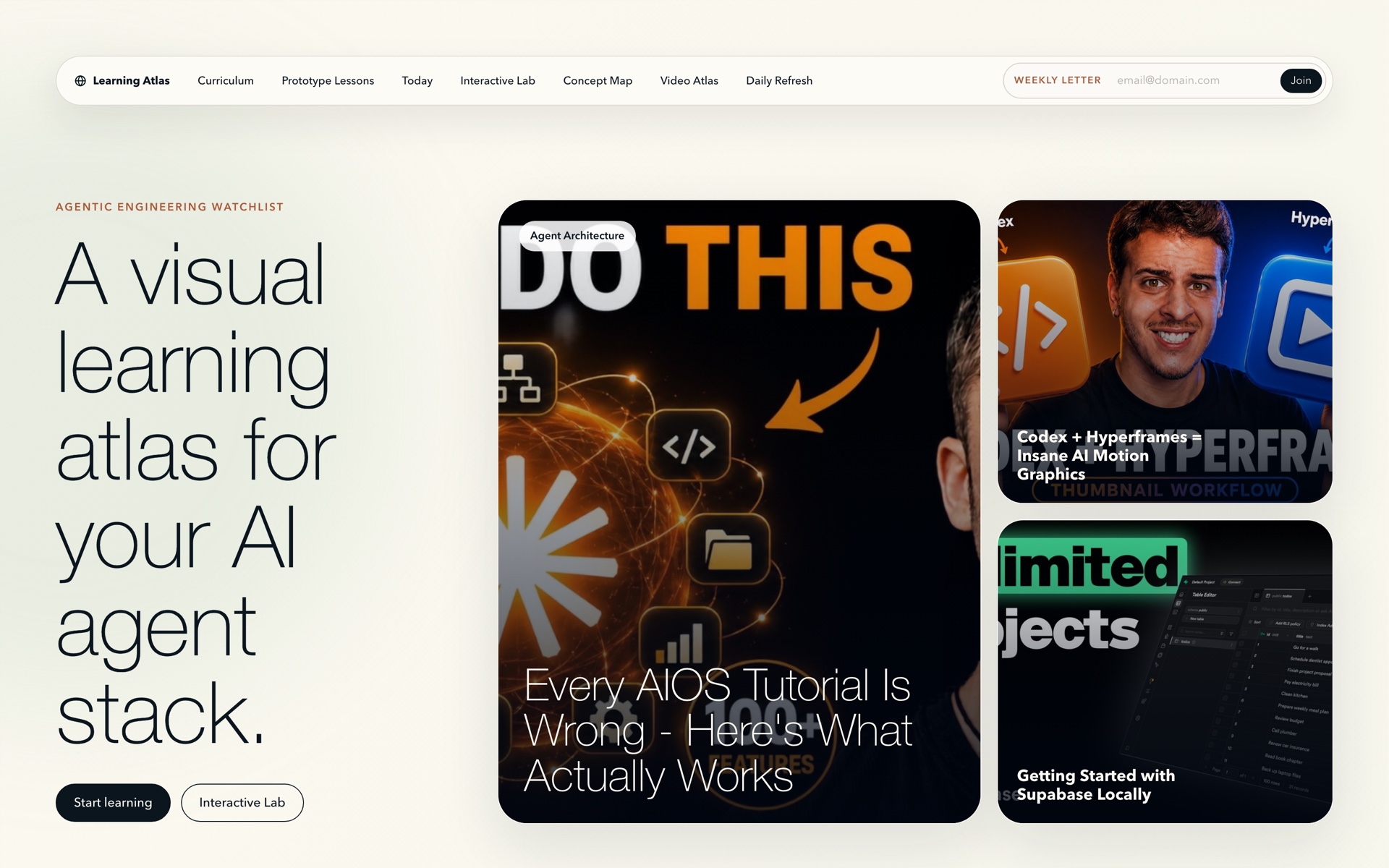
Building judgment, not just output, into how teams learn AI
Enablement at scale
A 100+ resource Learning Atlas, live at learningatlas.us and refreshed as new resources are saved.
Judgment, not output
Turns passive watching into mental models, practice prompts, quizzes, and buildable projects: teaching when to trust AI and when to slow down.
Quality as a gate
Encodes AI-workflow craft into a repeatable loop: inspect, render, verify, revise, publish. Enforced, not just advised.
Designers do not need more AI hype. They need repeatable ways to learn and improve, with judgment built in.
The live system is a 100+ resource Learning Atlas that turns saved AI material into structured teaching, pairing plain-English mental models with supporting resources and projects that make the ideas stick. It is part training environment, part operating library, and part quality checklist for AI-assisted work.
The work connected design craft with agent workflows: how to brief, how to choose constraints, how to verify outputs, how to use screenshots, and when to slow down because the result is not yet good enough.
AI design tools can produce attractive artifacts quickly, but speed does not teach taste, product judgment, or quality control. The learning system needed to make the workflow visible enough that designers could improve their own process.
- Examples had to be concrete: screenshots and skills, with design systems and working app states shown.
- Lessons needed evidence instead of generic summaries or recycled advice.
- Quality gates had to cover visual craft, source grounding, screenshot verification, and usability.
- The system needed to support designers and builders using different local agents and tools.
I treated the Atlas as an enablement product, not a content dump: a guided map of what to learn, why it matters, and what to build. Videos are grouped by the capability they build; each cluster gives a mental model, the supporting videos, and a project that turns watching into skill.
Teach through artifacts
Use working examples and rendered screenshots, with reusable skill files so lessons are inspectable.
Ground the lesson
Transcript-based enrichment keeps teaching tied to source material and avoids generic advice.
Make quality explicit
Quality checks cover design craft and visual verification, with prompt specificity and evidence before publishing.
The judgment that shaped the Atlas was sequencing: prove the teaching before scaling the library. I built two lessons deeply first (Agent Architecture and Agentic Engineering) as the standard every other world has to meet: bigger source imagery, plain-English definitions, and diagrams, guided study, and practice with recall built in. It is less a learning site than a working method, and other designers have used it to build the same judgment, evidence the system transfers beyond me, not just a personal workflow.
AI literacy
Turns abstract AI capability into repeatable product and design workflows.
Design enablement
Gives people reusable examples, source-grounded lessons, and practice that builds judgment.
Quality gates
Makes verification and revision explicit enough to teach and inspect.
Inside the Atlas: lessons and transcripts, plus quality loops
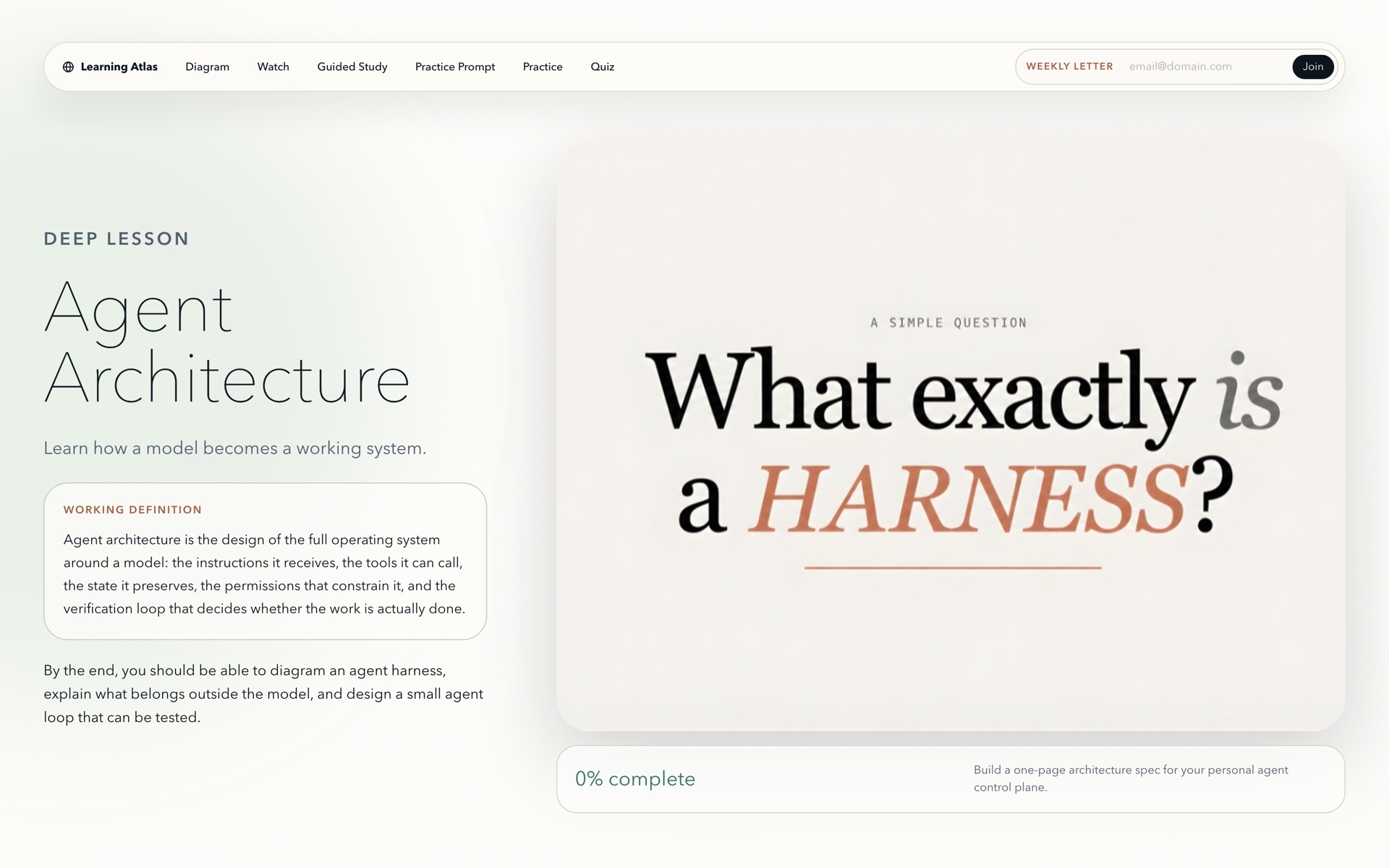
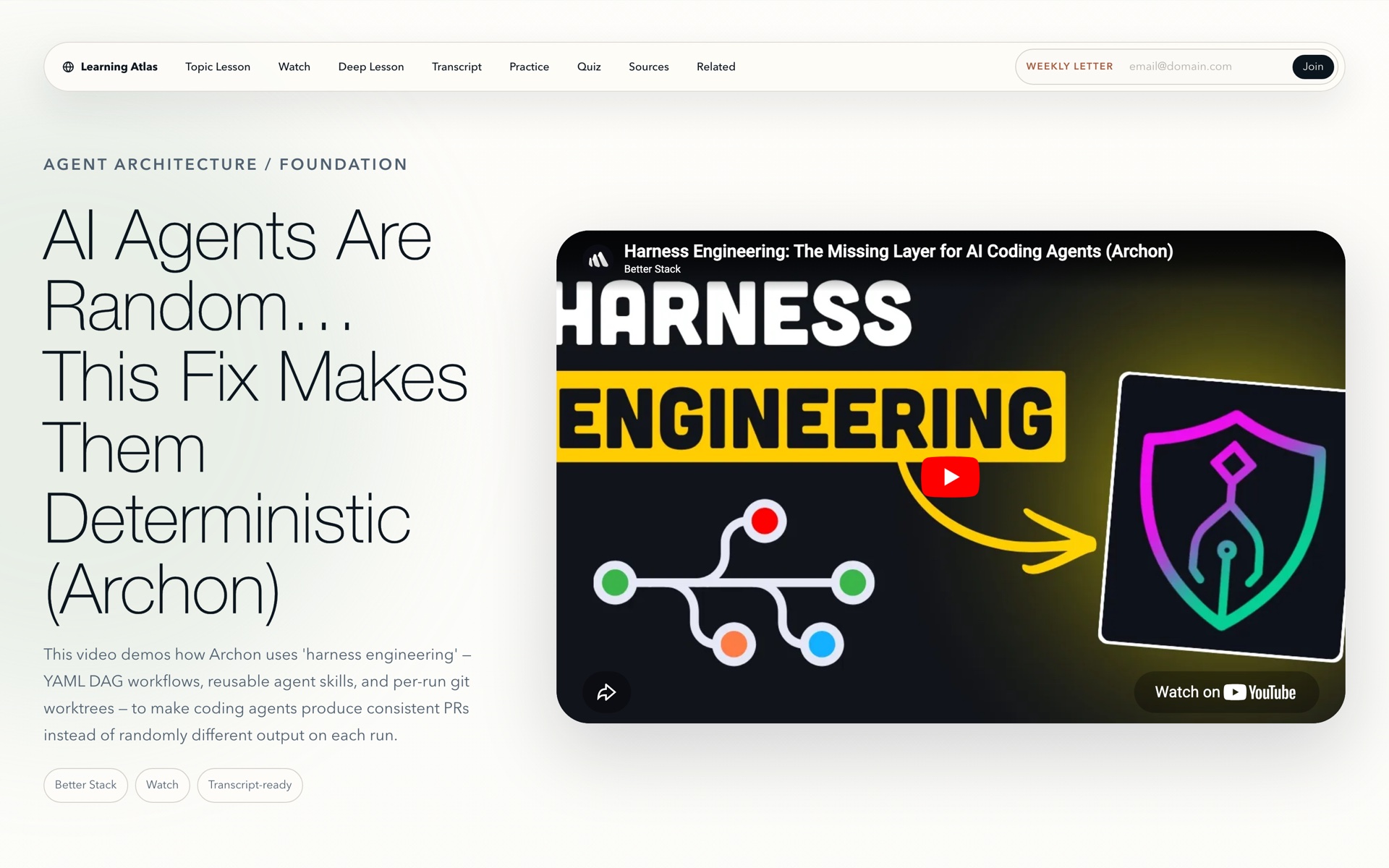
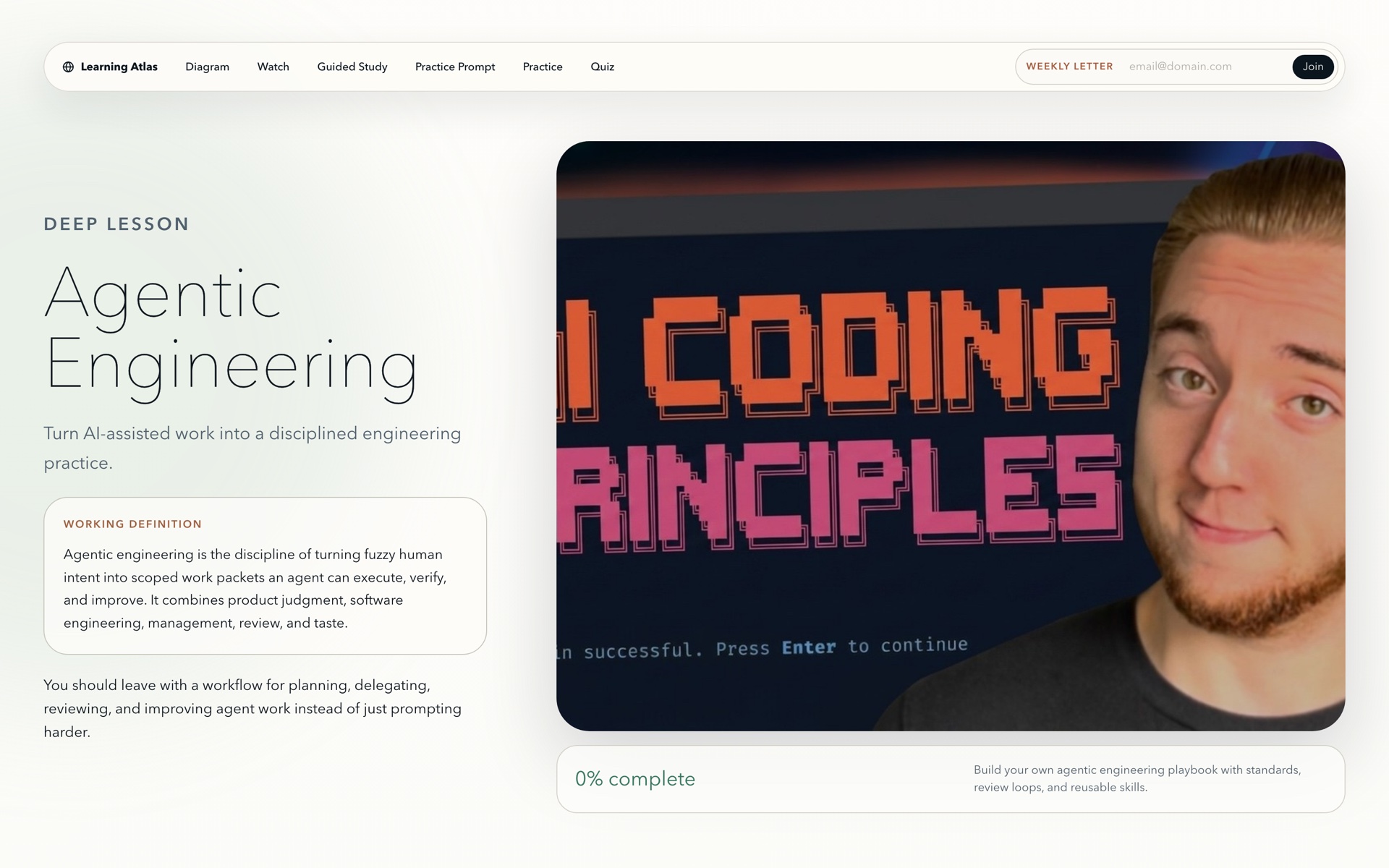
The point was not to automate taste. It was to give designers better evidence and better constraints, with a clearer review loop.
AI should not automate taste. It should help people build judgment.
A living learning product
A 100+ resource Learning Atlas, live at learningatlas.us and refreshed as new resources are saved, not a static resource dump.
Capability, not just speed
Mental models and misconception checks. Practice prompts and build assignments grow a designer's judgment about when AI helps and when it doesn't.
Quality made repeatable
The inspect → render → verify → revise → publish loop encoded into the system itself, so good practice is enforced, not hoped for.