An AI-native clinical workflow clinicians can trust
Product and design leadership for Otto: turning an open-ended "AI for healthcare" mandate into provider-centered jobs, reviewable workflows, and the decision discipline to ship them safely.
Turning an open-ended AI mandate into accountable provider work
Validated direction
De-risked an AI-native product bet through provider research and a working prototype before production build.
Trust by design
Held AI to drafting and synthesis, with recommendation; clinicians keep review and correction, plus approval. Prototype research supported the draft → edit → sign model.
Operating model
Ran a signals → requirements → decisions traceability system across product, research, design, and engineering, so speed never outran accountability.
The work was less about making AI visible and more about making clinical responsibility visible.
Otto is Tebra's ground-up, AI-native practice platform for solo mental health providers, the clinicians who run their own therapy and counseling practices. Rather than bolt AI onto a legacy EHR, the team reframed the entire product around the provider's day and its core jobs. The program ran under the working name ATTUNE before the product became Otto.
It all came together in roughly a hundred days. The product is now live as Otto, Tebra's AI-native EHR for mental health. The outcomes below remain the validated pre-launch evidence that shaped the product, not post-launch adoption or revenue claims.
I led product design direction across a cross-functional team spanning product and research with engineering and PM, and directed an AI-augmented design workflow. My remit was strategy, design judgment, design-system stewardship, executive alignment, and review discipline: turning open-ended AI enthusiasm into jobs, requirements, gates, and artifacts that the whole team could inspect and stand behind.
Healthcare AI outruns accountability when teams optimize for generated output before the clinical workflow is clear. Otto had to support real provider work (and earn trust) without ever implying that a model owned the record. Day-in-the-life research with solo providers surfaced the same pressures again and again:
- Documentation is a burden, not a tool: notes spill into nights and weekends, and providers keep a second, informal system just to remember the patient.
- No single platform covers the day; providers stitch together multiple tools and quietly use general-purpose AI as a shadow clinical assistant.
- Preparation is a gap, not a habit: some walk into sessions cold, which providers themselves named as a source of stress.
- The calendar is the command center: any product that treats it as a secondary screen loses.
- And AI assistance only works if it stays inspectable, source-aware, and explicitly approved by the clinician.
I shaped a decision model that connected provider research signals to PRD requirements, workflow maps, design decisions, prototype evidence, and release gates: a continuous chain from "what we heard" to "what we ship." The goal was not to slow the team down. It was to make each move inspectable enough that speed never created hidden risk.
Frame by provider jobs
Anchored the product in the core jobs of a solo practice rather than a generic AI-assistant surface, so every requirement traced back to real provider work, not novelty.
Dynamic canvas, human decision
Replaced static screens with a context-aware canvas that brings the right work to the provider, while AI stays in draft and synthesis, with recommendation; the clinician owns review and correction, plus approval.
Make the path inspectable
Traced requirements to their evidence and gated the roadmap with prototype validation and review loops, so the team knew when a concept was ready to build.
The product needed to learn fast without asking clinicians to trust a black box with the record.
A system that executes, not a set of features you operate.
Most software hands a provider features and leaves the work to them. Otto starts from the job instead. We scoped every capability a solo mental health practice actually needs, then built the AI substrate to carry them. The capability count did not get smaller. The amount of work left to the provider did.
- Week & agenda views
- Mobile schedule
- Flexible booking
- Recurring appointments
- Edit & reschedule
- Time-off blocks
- Conflict checking
- Appointment actions
- Today workspace
- Visit prep details
- Notifications & alerts
- AI patient summary
- Whole-chart synthesis
- Auto-refresh
- Last-session highlights
- Safety-aware highlights
- Stripe Connect
- Auto charge
- CPT prefill
- Review & override
- Flexible collection
- Balance alerts
- Secure payment links
- Fee schedule
- Refunds & receipts
- Notes from audio
- Provenance badge
- Review & sign
- Autosave & drafts
- Addendum flow
- Correction tagging
- Rich note editor
- DAP & SOAP
- Autosave & addenda
- Post-visit processing
- Transcript import
- Safety findings
- Post-sign extraction
- Update detection
- Confirm / dismiss
- Diagnosis linkage
- Treatment-plan matching
- Medication capture
- Red-line monitoring
- AI instrumentation
- Failure recovery
- Secure join links
- Prejoin media check
- DOB verification
- Provider meeting room
- Waiting room
- Split visit layout
- Secure login
- Practice selection
- Responsive workspace
- List & search
- Patient profile
- 360 tabs
- Appointment history
- Clinical notes
- Billing history
- Global search
- Provider signup
- Credential capture
- Concierge onboarding
- Trial counter
- Trial limits
- Read-only access
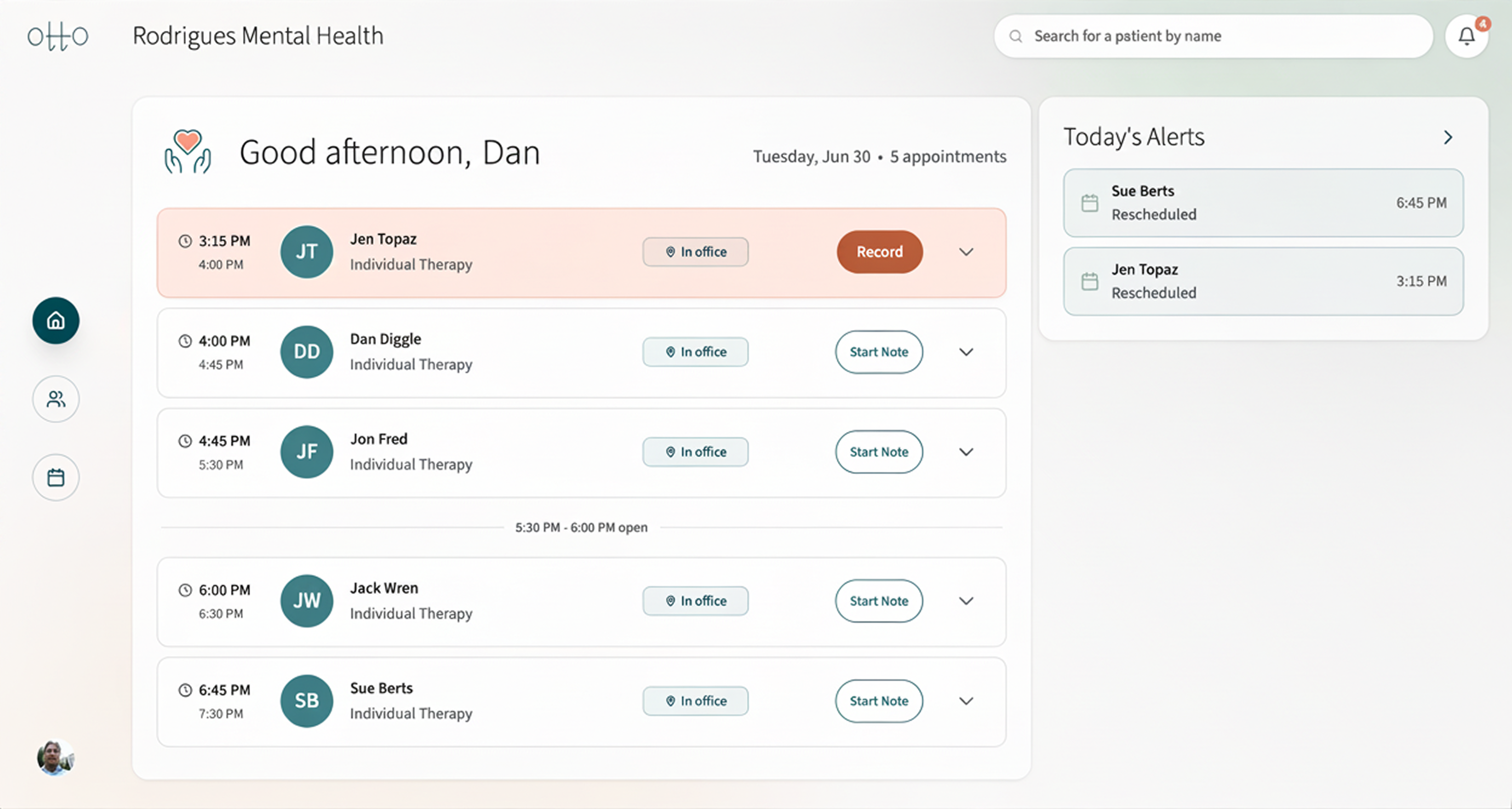
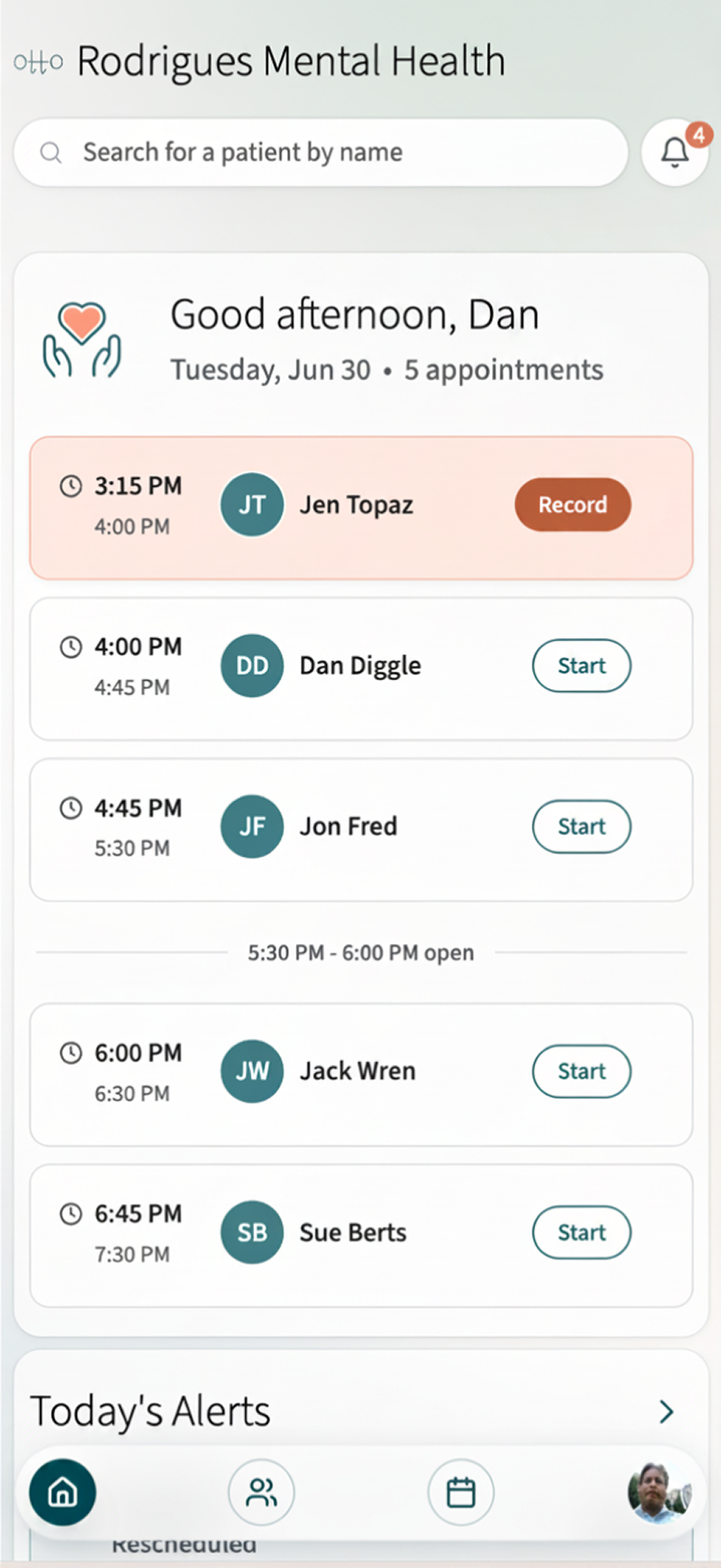
Simple at the surface, complex underneath.
A few clean screens are all a provider sees. The AI substrate and the architecture that carry them are the real scope of the work.
- Open 7 tabs to assemble context
- Hunt through 4 screens of menus
- Type the note from scratch
- Re-key codes into the biller
- Reconcile, double-check, submit
- …and 30 more clicks
- 1 · See your day, already prepped
- 2 · Talk. The note writes itself
- 3 · Glance, approve, done
The genius is what you don't see.
The decision that defined the product was a constraint, not a feature: AI could draft, synthesize, and recommend, but it could never own the record. I made that boundary the spine of the design (provenance, review, correction, and explicit clinician approval as first-class states) and tied every requirement back to provider evidence through a signals → requirements → decisions chain, so the team could tell a validated bet from an untested one. I led design direction across a cross-functional team of product and research with engineering and PM, and directed an AI-augmented design workflow that let a small team cover more research synthesis, requirements, and review than its headcount implied.
The way the design work got made changed too. I stopped handing off mockups and started designing in the running code, working on a multi-agent harness that generates screens against an encoded record of my design judgment. My review became the gate every screen has to clear before it ships.
Operating model
Stood up a signals → requirements → decisions system and an AI-augmented design workflow, raising the team's coverage and review quality without adding headcount.
Cross-functional alignment
Gave product, design, engineering, and leadership a shared language for risk and progress, and held the review discipline that kept it honest.
Trust boundaries
Kept provenance and approval explicit, with review states central to the product model, so AI accelerated the work without ever owning the record.
Three layers proved out end to end on Otto, each one interlocking with the next.
AI-native product
A surface simple enough to recede, because the intelligence does the work the provider used to. Proved: the product surface.
AI-native architecture
Built so intelligence is the substrate rather than a bolt-on, with a model assumed in the loop at every layer. Proved: the architecture.
AI-native product development
A small team building at a pace the old model cannot reach, with AI in the loop at every step. Proved: the speed.
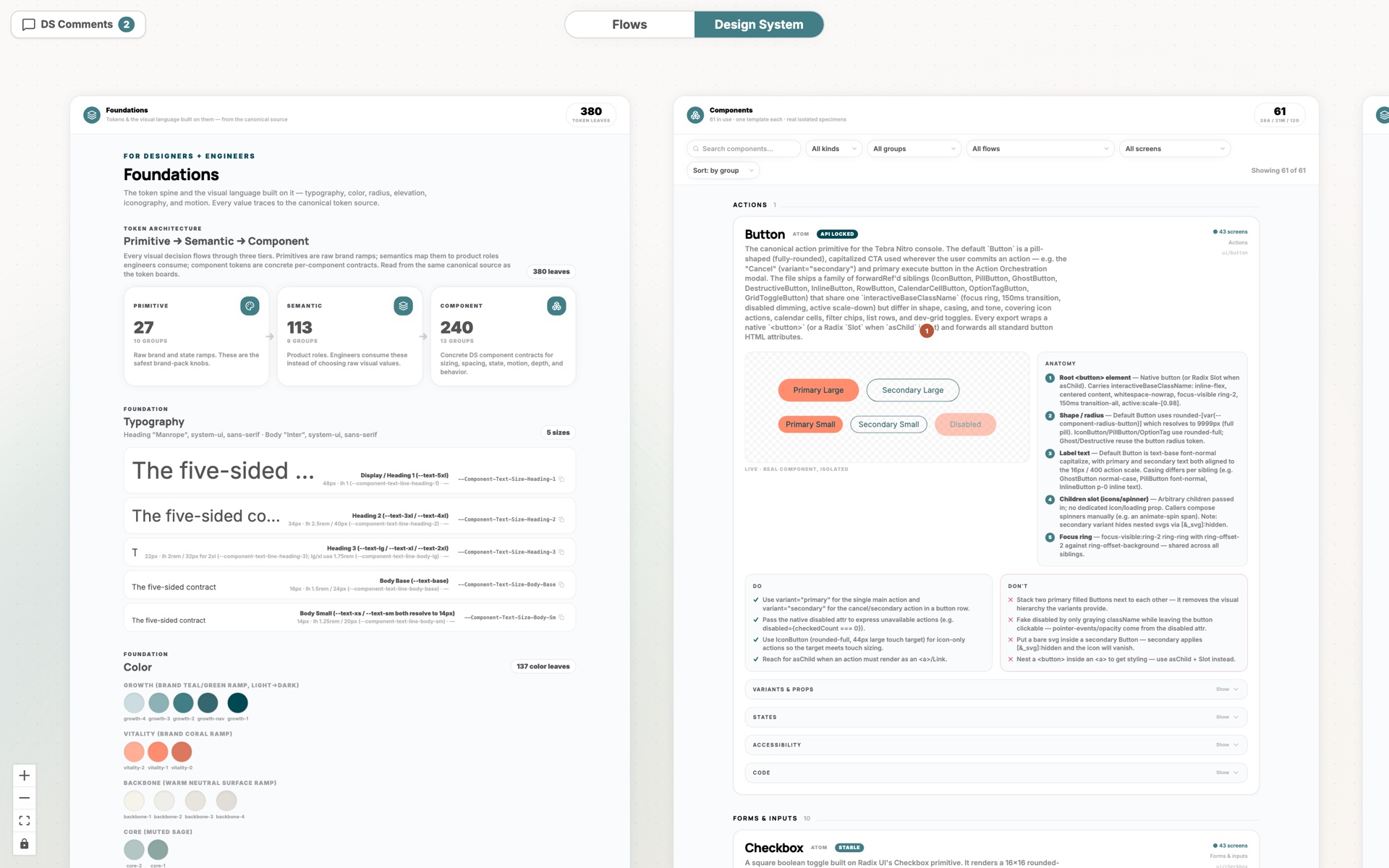
The system: design system and flows, plus components
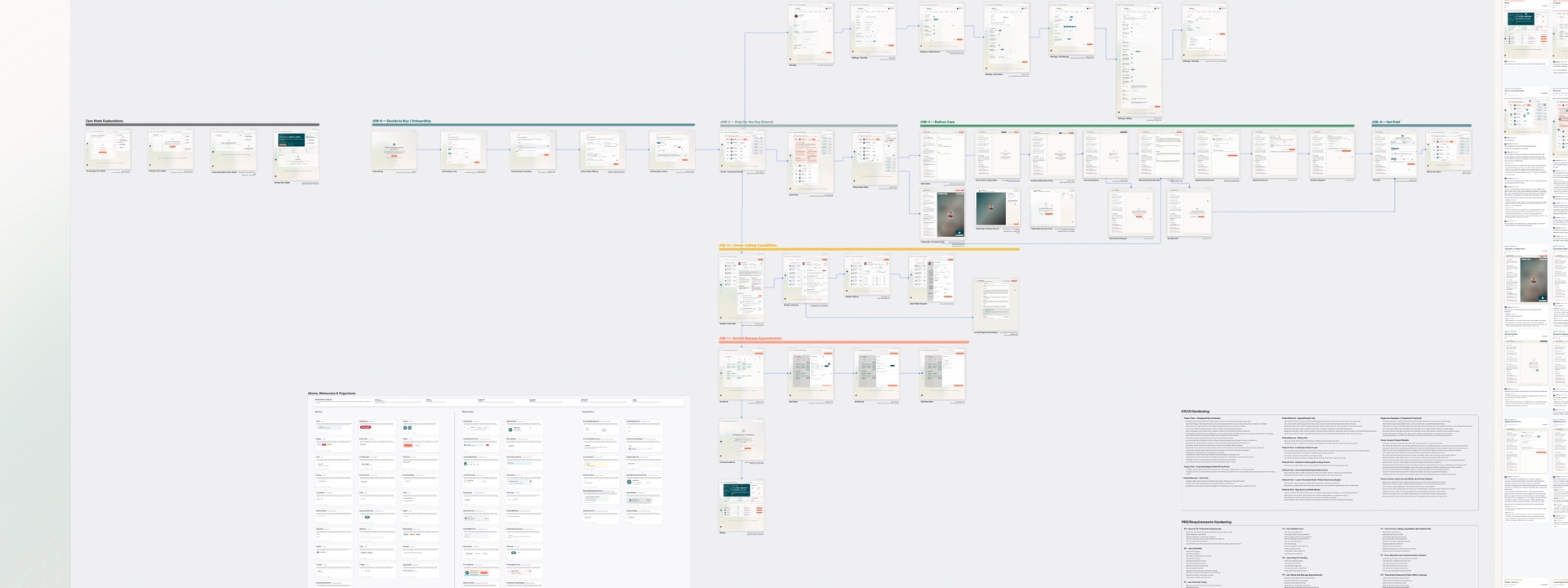
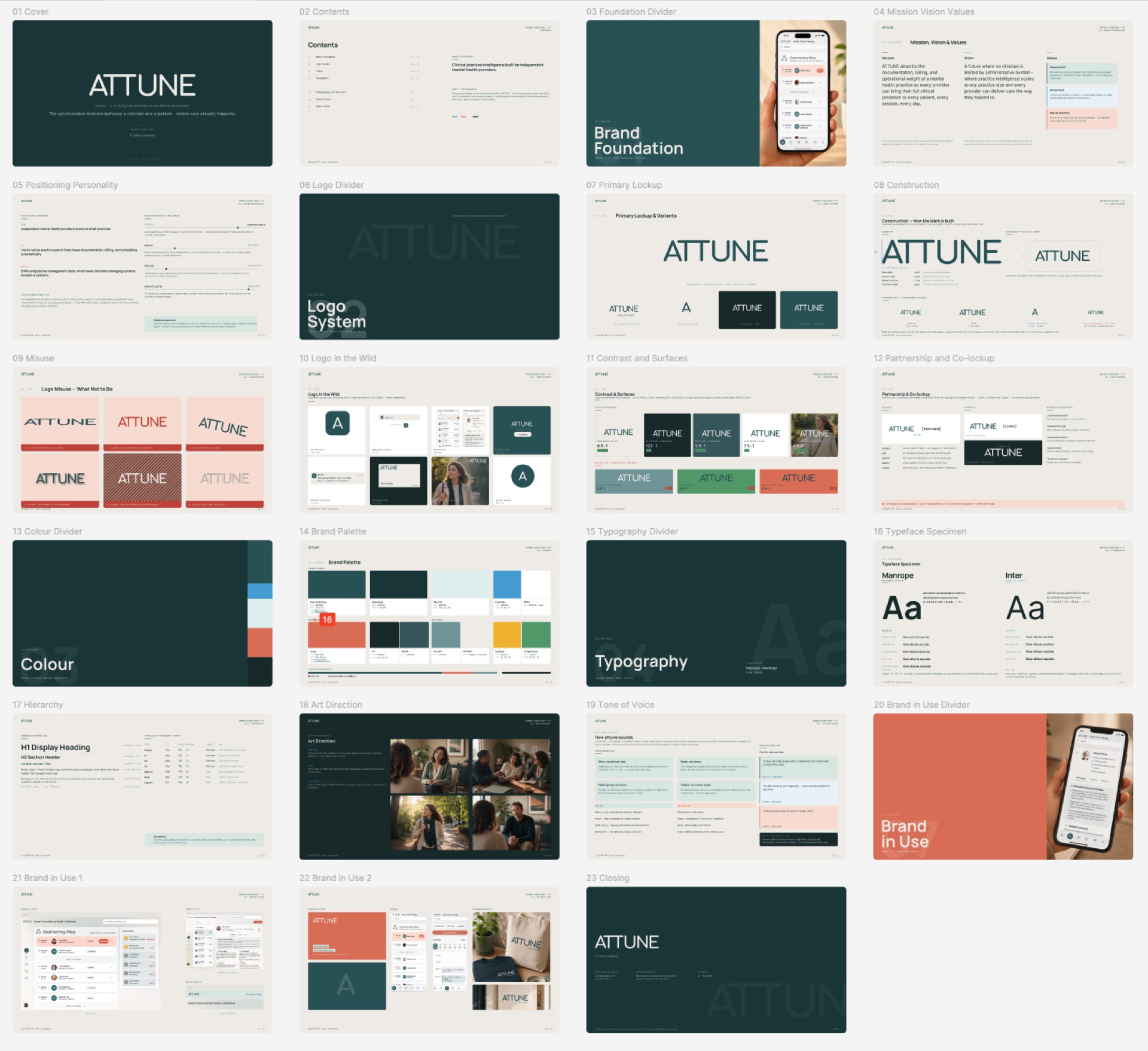
Prototype and early-provider research produced the strongest evidence for the direction: what real clinicians could do with it, in their words.
“This is essentially…doing what a peer or clinical supervisor would do. And then you would pay more for it.”
Clinical intelligence that surfaces context and risk, with next steps like a supervisor reading over your shoulder.
Peer and clinical supervision is recommended, rarely affordable. Now it’s built in.
AI-native gives every provider a supervisor.
“So that feels better. It feels just more clean and clear…much easier.”
A home view with balance alerts and exactly who to reach out to and reschedule.
The day arrives already sorted. No hunting for what needs doing.
Even the careful skeptic ends the day saying it’s easier.
“I feel like it’s my brain.”
A system that holds the whole picture of every patient the way she would.
Nothing slips, because there are no more cracks to slip through.
When the tool thinks like the provider, using it turns into relief.
A product can move quickly and still leave the final decision where it belongs.
The direction is de-risked, the core experience is validated, and the team has an accountable operating model for a focused first release with a small cohort of solo practices. These are pre-launch outcomes, not shipped revenue.
A new interaction model
Otto surfaces what matters and acts on it, so the provider uses the software instead of operating it. Prototype research validated the direction and the draft → edit → sign model for AI notes before the production build.
A real product, not a demo
A small team built something that can stand on its own: a real market and a disciplined first release, scoped for a small cohort rather than a broad, unproven launch.
An operating model that scales
Requirements traced to evidence and review findings resolved before build lock, with one team designing and deciding, then shipping in a single environment.
Two shifts outlast the release. Otto positions Tebra to set terms in an AI market rather than react to it, moving the company off the fast-follower footing it started from. And the way the work gets made changed: handoffs dissolved into a process where one person can carry an idea from intent to a shipped surface, and a quarter of work can collapse into a week.
The team set out to disrupt itself, and that part is settled.
Whether the same approach resets the wider market is the open question, and the only way to answer it is to keep shipping. The Town Hall demo below is where the team handed the work over.